

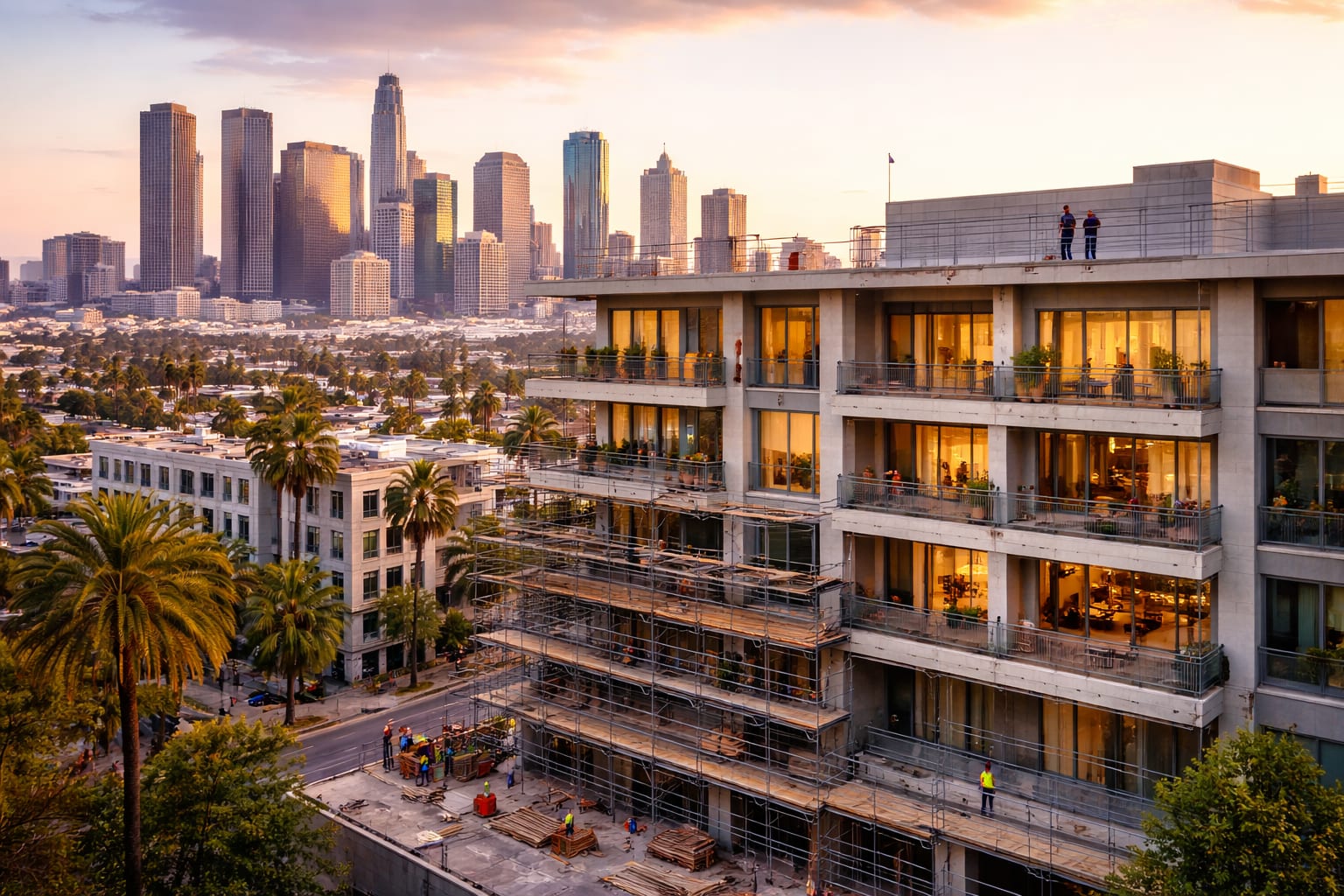

Los Angeles is taking a new approach to its housing shortage by making it easier to convert vacant office buildings into residential units. A recently approved city policy aims to speed up the process of turning underused commercial spaces into apartments, a move that could add thousands of homes across the city in the coming years.
The change comes at a time when many office buildings remain partially empty following the shift toward remote and hybrid work. Instead of leaving these spaces unused, city leaders are encouraging developers to repurpose them into housing, especially in areas where demand remains strong but new construction has been difficult due to costs, zoning restrictions, and limited land availability.
Supporters of the plan believe that adaptive reuse could become one of the fastest ways to increase housing supply in Los Angeles. Converting existing structures often takes less time than building from the ground up, and it allows the city to add units in already developed neighborhoods with access to transportation, jobs, and services. This could help relieve pressure on rents and home prices over time, particularly in high-demand areas.
However, the process is not without challenges. Office layouts are not always easy to convert into residential spaces, and renovation costs can be significant depending on the building’s age and design. Even so, many experts see this strategy as a practical response to the current market, where the need for housing continues to outweigh available inventory.
If successful, the effort could reshape parts of Los Angeles by bringing new residents into business districts that have lost activity in recent years. More housing in these areas could also support local businesses and create a more balanced use of urban space.
As the city looks for solutions to its long-standing housing shortage, converting vacant offices into apartments represents a shift toward flexibility and adaptation. Rather than expanding outward, Los Angeles is exploring ways to make better use of what already exists — a strategy that could play an important role in the future of the region’s real estate market.
